
Monitoring immunohistochemical stain quality with artificial intelligence
Monitoring immunohistochemical stain quality with artificial intelligence

UMC Utrecht has established an advanced digital pathology set up in their pathology lab. In this webinar, Professor van Diest will present the results of an extensive IHC stain and stainer evaluation performed using Qualitopix. The quantification of stain consistency enabled the lab to significantly improve their stain quality for HER2 and unveil staining variations based on their stainer.

Paul J van Diest, Professor, UMC Utrecht, The Netherlands
Paul J van Diest studied Medicine and did his PhD and pathology residency at VU University Medical Center in Amsterdam. After obtaining his Board certification (1996) he became Consultant Pathologist, Associate Professor (1999) and full Professor (2001). Since 2003 he is Head of the Department of Pathology at University Medical Center Utrecht. This department has gone fully digital and at the moment is involved in AI-research and implementation. He is Adjunct Professor of Oncology at the Sidney Kimmel Oncology Center at Johns Hopkins, Baltimore, USA, serves on the editorial board of international journals, and has been active in several international societies.
Inter-laboratory HER2 variability and daily quality control

In this lecture, Dr. Hart will present a study on inter-laboratory HER2 variability and daily quality control across 40 Dutch pathology laboratories. He will explore the use of calibrators and cell lines, emphasize the importance of revalidation of HER2 tests, and discuss the advantages of Qualitopix as an AI-assisted tool for detecting staining inconsistencies in laboratories.
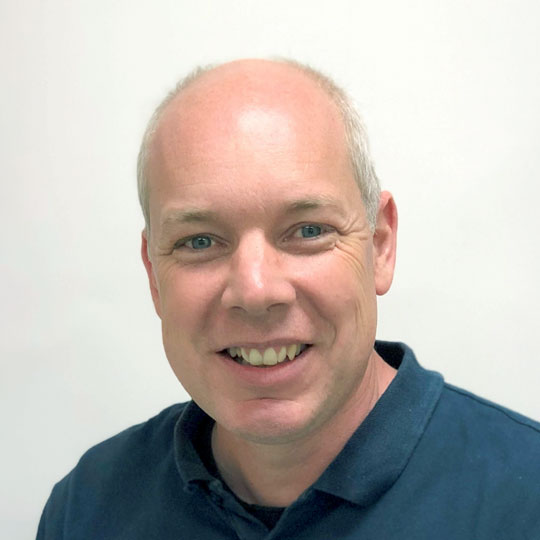
Nils ‘t Hart, Pathologist, Isala Hospital, The Netherlands
Nils ‘t Hart is a thoracic pathologist with a position at Isala since 2009. Isala is a top clinical hospital in the center of The Netherlands. Since Nils finished his residency at UMCG, he is focusing on diagnostics in thoracic pathology, molecular diagnostics and predictive immunohistochemistry. He is interested in new developments in oncology, how to implement predictive markers in daily practice using AI and eager to do pathology research. Last but not least, he is always looking for new innovative methods to teach about his passion.
Standardizing Ki-67 assays using cell lines

Ki-67 is a widely used marker of cell proliferation. In his talk, Regan Fulton will give an overview of the biological function of the Ki-67 protein and its utility in different clinical indications. He will demonstrate current problems with the assay’s reproducibility and suggest solutions to improve the standardization of the assay using cell lines.

Regan Fulton, CEO, Array Science, USA
Dr Fulton received his MD and PhD from the University of Minnesota and completed his residency in Anatomic Pathology at Stanford University. Following residency, he completed fellowships in Surgical Pathology and Immunodiagnosis at Stanford University and is board-certified in Anatomic Pathology. He is the founder and CEO of Array Science, LLC, a manufacturer of control and proficiency-testing material. He holds multiple patents for making tissue and cell culture microarrays. He now works full-time at Array Science, while providing pathology support in the development of diagnostics, as well as various phases of clinical trials. Dr Fulton has served as a consultant and paid speaker for several pharmaceutical and biotechnology companies.
How to achieve consistently accurate IHC test results

Published studies consistently demonstrate discrepancies in immunohistochemistry (IHC) staining from one laboratory to the next. In practice, clinical IHC laboratories usually report consistent results on samples that are negative or strongly positive. However, tumor samples with biomarker expression levels in the middle, between these two extremes, yield variable results among laboratories. If the IHC test is for a targeted therapeutic, then these are the patients at greatest risk to be treated incorrectly. The answer is to adopt the kind of quality assurance that is used in other parts of the clinical laboratory.
In this seminar, we describe the theory and practice of new IHC quality assurance tools. Calibrators provide, for the first time, a direct readout on the analytic sensitivity of IHC assays. Achieving a target lower limit of detection (LOD) guarantees an appropriate stain intensity. Controls, on the other hand, are well-established in IHC. However, labs are usually not aware if their controls have relevant biomarker concentrations, including whether the biomarker concentration is even in the assay dynamic range. This presentation includes a description of both the science and clinical use of IHC calibrators and linear-range controls, including their objective quantification and use for statistical process control. These more advanced quality assurance tools are required to ensure accuracy and consistency in patient testing.

Steve Bogen, CEO, Boston Cell Standards, USA
Dr Bogen is a Board-Certified Clinical Pathologist, having graduated from the University of Chicago Pritzker School of Medicine (M.D.) and the Weizman Institute of Science (Ph.D.), with a post-graduate residency and research fellowship at the Brigham and Women’s Hospital. He is Adjunct Professor of Pathology and Laboratory Medicine at Tufts University School of Medicine and served as Medical Director, Clinical Chemistry Laboratory at Tufts Medical Center until 2021. He is also an NCI-funded investigator whose research has focused principally on developing better diagnostic tools. Dr. Bogen was previously the founder of CytoLogix Corporation. He now serves as CEO of Boston Cell Standards.

In this webinar Colin will talk about the important role of cell lines together with Qualitopix in achieving staining consistency.

Colin Tristram, CEO, Histocyte, UK
Colin has spent the last twenty years developing, marketing, and commercializing a range of products for the IVD market, specifically tissue diagnostics. Colin is the founder and current CEO of HistoCyte laboratories. He studied Medical Microbiology at Newcastle University, specializing in immunology. His MSc focused on HER2 in breast cancer, involving the development of procedures for IHC controls. With this knowledge he and his colleagues started HistoCyte and developed a range of high-quality, reproducible, and cost-effective analyte control material for same-slide use in histopathology. HistoCyte was acquired by Atlas Antibodies in 2021.

Dirk Vossen will introduce Visiopharm’s Qualitopix solution, which allows the monitoring and documentation of staining consistency. Learn about how easy Qualitopix fits into your workflow without the need for installation or integration. Be ready for new demands and regulations as the community is seeing the need for more regulation on IHC staining especially for predictive purposes. Dirk will also show the results of the first Qualitopix customers, who were able to identify unexpected shifts in their staining intensities. The labs already identified different reasons for the inconsistent staining, which will be explained.
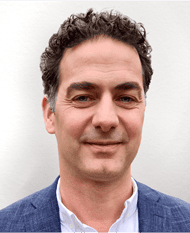
Dirk Vossen, CDO, Visiopharm
Dirk Vossen leads a cross-functional team to develop diagnostic and clinical applications of digital pathology. His track record of creating value through innovation in digital and computational pathology spans the entire range of development, from ideation through validation and certification of medical devices, as well as commercialization strategies.