
Only a small subset of patients with clear cell Renal Cell Carcinoma (ccRCC) respond to immunotherapy with checkpoint inhibitors. Research has shown that additional mechanisms of inhibition prevent the majority of patients from successful treatment. Recent studies into the inhibitory role of macrophages portend that these cells are associated with lower survival rate in several different cancer types. In this webinar, Immunologist Prof Dr Elfriede Nößner will present her research on specific macrophages in RCC (“ercDCs”) which are associated with poor outcome and their potential as new targets in immune therapy.
Presented as a LabRoots webinar on January 19, 2021.
-
- What is known about the role of macrophages in immuno-oncology in general and in RCC specifically
-
- What are “ercDCs” and how do they interact with T-Cells in RCC?
-
- Which possibilities exist to manipulate the ercDCs?
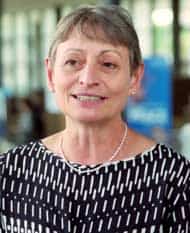
Dr Elfriede Nößner, Head of Immunoanalytics, Helmholtz Zentrum München, German Research Center for Environmental Health
Dr. Elfriede Noessner is professor at the Ludwig-Maximilians-University of Munich (LMU) in Munich, Germany, and employed by the Helmholtz Zentrum Munich, where she is the Head of Immunoanalytics Research Group. She is board certified in immunology by the German Society of Immunology. She spent 5 years at Stanford University. Her research topics include the biology of HLA proteins and the antigen presentation; the activation, maintenance and control of T cell responses; and the modulation of T and NK cells, as well as dendritic cells and macrophages in tissue milieus, including cancer.
Blood vessels bring oxygen and nutrients to every cell in the body while removing waste and allowing immune cells to survey. They do the same in cancer and other diseases. In most types of tumors, new vessels produced through angiogenesis have abnormal structure and function, leading to impaired perfusion that paradoxically supports malignancy. For this reason, the study of the micro-anatomy, morphology and function of blood vessels in tumors is essential to find new vulnerabilities to be targeted in our fight to tumors.
Dr Seano will present an overview of his works on blood vessel histological investigation. The study of the abnormalities of tumor blood vessels elucidated tumor features and is still shedding light on its pathology. Tumor vessels may be characterized by abnormal morphology, disrupted vascular basement membrane and reduced pericyte coverage. This causes dysfunction in perfusion and consequently leads to an hypoxic and immunosuppressive environment, typical of tumors. Breast cancer and glioblastoma are two of the most important tumors in the field of vascular microenvironment since we learnt that we can therapeutically modulate and temporally normalize vascular function. Dr Seano will show digital pathology results published during his period at Harvard Medical School and unpublished data from his own new lab.
Presented at the virtual Pathology Visions 2020 meeting during Visiopharm’s Industry Workshop on Monday, October 26, 2020.

Dr Giorgio Seano, Head of the Tumor Microenvironment LabInstitut Curie, Orsay-Paris (France)
Dr Seano is the Head of the Tumor Microenvironment Lab at Institut Curie, Orsay-Paris (France). His scientific interests are tumor vasculature, vessel co-option, cell migration and radioresistance. Among others, he published on Science, Cancer Cell, PNAS, Nat Cell Biol, Nat Biom Eng, JNCI, Blood and Cancer Res.

Are you getting the maximum out of your sample images?
In this webinar, Joseph Daniele Ph.D. will demonstrate the power of deep learning to investigate and quantify variability within a cell.
Determining mitotic activity is a common component of many tumor grading systems but relies on tedious identification and enumeration of mitotic figures within selected fields of view. Using Visiopharm’s deep learning module, Joe and his group have trained a classifier to automatically identify and count a range of mitotic figure morphologies in an entire tissue sample.
Joseph R. Daniele, PhD, Institute Research Scientist
Dr. Daniele received his Ph.D. in Biochemistry from Harvard, focusing on protein trafficking and axonal transport of the oncogenic mediator Hedgehog. He then proceeded to Andrew Dillin’s lab at UC-Berkeley where his research focused on high-content analysis and characterization of the unfolded protein response.
Intrahepatic macrophages influence the composition of the microenvironment, host immune response to liver injury and development of fibrosis. In this webinar, Heather Stevenson will present her group’s findings from an analysis of five different antibodies commonly observed on macrophage populations (CD68, MAC387, CD163, CD14 and CD16).
Using a multiplex protocol, the group stained biopsies collected from representative patients with chronic liver diseases, including chronic hepatitis C, non-alcoholic steatohepatitis and autoimmune hepatitis. Spectral imaging microscopy and deep-learning-based analysis was applied and found to be a powerful tool that enables in situ analysis of macrophages and other cells in human liver biopsies and may lead to more personalized therapeutic approaches in the future.
-
- How multispectral imaging and deep-learning-based image analysis facilitates comparison and visualization of macrophage populations
-
- About spectral unmixing of fluorophore signals, subtraction of auto-fluorescence and preservation of hepatic architecture
-
- How cell phenotyping, tissue segmentation and t-distributed stochastic neighbor embedding plots can facilitate characterization of numerous cell populations
-
- How to optimize multiplex staining and spectral imaging microscopy
-
- Discuss types of imaging analysis available for multiplex stained tissues
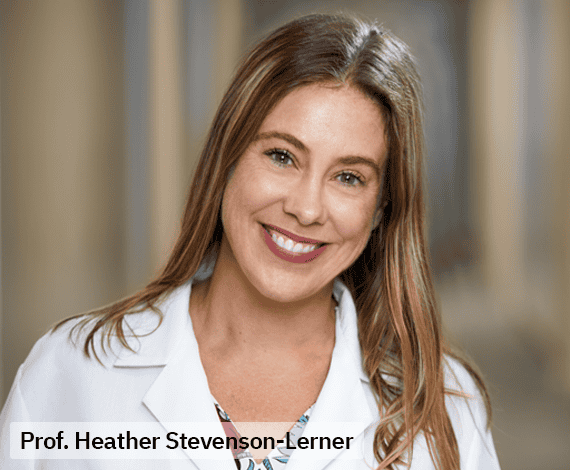
Heather Stevenson-Lerner, MD, Ph.D., FCAP, Asst. Professor, Dept. of Pathology Liver & Transplantation Pathologist, The University of Texas Medical Branch
Dr. Heather Stevenson-Lerner’s clinical focus includes liver, transplantation, and gastrointestinal pathology. Dr. Stevenson-Lerner completed a fellowship in the Transplant Pathology Division at the University of Pittsburgh Medical Center. Dr. Stevenson-Lerner leads UTMB’s Liver Diseases Diagnostic Management Team, which is popular with hepatologists, transplant coordinators, fellows, and residents.
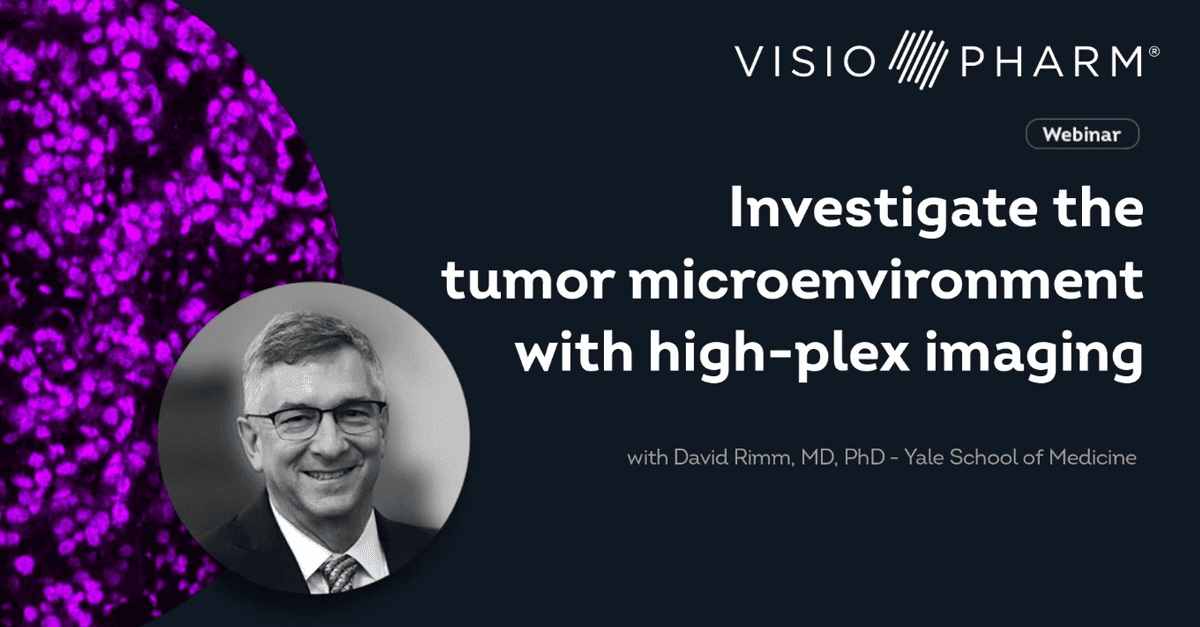
Find out why Dr Rimm’s work suggests that a subset of cells that have lost beta-catenin expression may be associated with non-response. In this seminar recording from USCAP 2020, Dr Rimm explains how you can benefit from exploratory analysis using AI-powered phenotyping.
Learn how his group used Visiopharm AI-based software to help them get meaningful results from next-gen imaging technologies like Fluidigm’s IMC.
-
- Methods of measurement –co-localization, compartmentalization, and measurement vs segmentation and counting
-
- How his lab used tSNE plots to show differences between responders and non-responders to trastuzumab
David Rimm, MD, PhD, Professor of Pathology and Medicine (Oncology); Director of Yale Pathology Tissue Services. Yale School of Medicine
David has authored over 400 peer-reviewed papers and holds eight patents. His research lab group focuses on quantitative pathology using the AQUA® technology invented in his lab, and other quantitative methods, including Visiopharm´s phenotyping module.
His projects relate to predicting response to both targeted and immune- therapy in cancer and standardization of those assays for CLIA labs.