
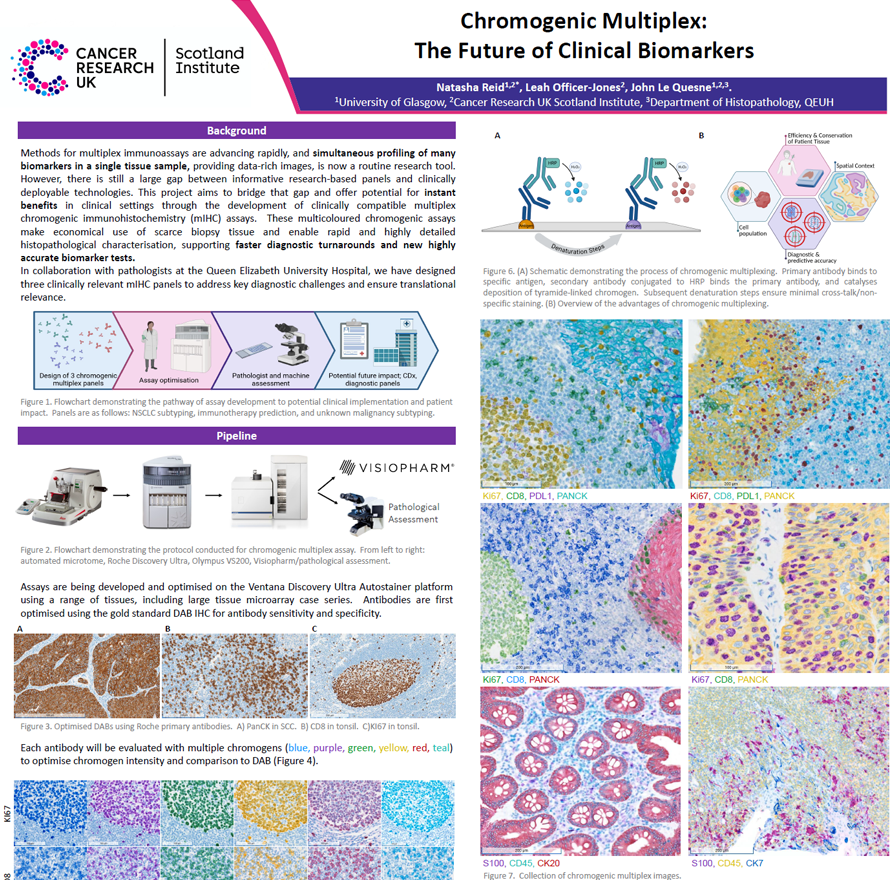
The poster presents the development of chromogenic multiplex immunohistochemistry (mIHC) assays designed for clinical use. It highlights how multicolored chromogenic staining enables simultaneous profiling of multiple biomarkers in a single tissue sample, improving diagnostic accuracy and turnaround times. The work focuses on creating clinically relevant panels for lung cancer subtyping, immune engagement, and poorly differentiated malignancies, aiming to bridge the gap between research tools and routine clinical workflows for next-generation biomarker testing.
Natasha Reid1,2*, Leah Officer-Jones2, John Le Quesne1,2,3
- University of Glasgow
- Cancer Research UK Scotland Institute
- Department of Histopathology, QEUH

Watch this short video to see how our customers are using Discovery and learn more here.
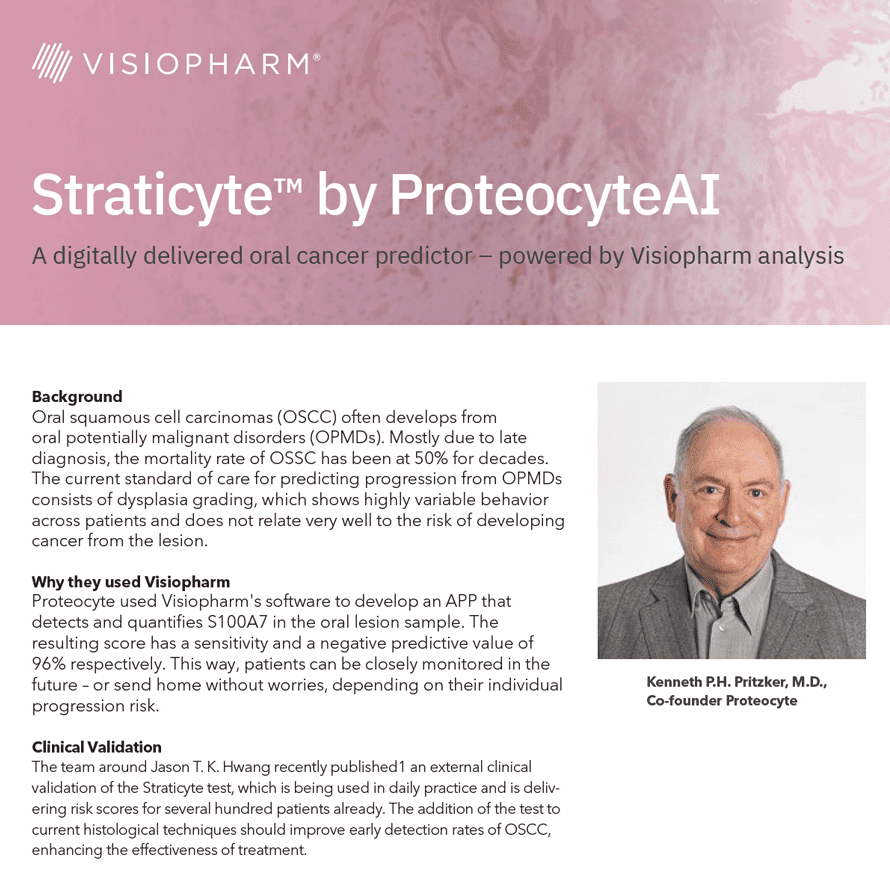
Oral squamous cell carcinomas (OSCC) often develops from oral potentially malignant disorders (OPMDs). Mostly due to late diagnosis, the mortality rate of OSSC has been at 50% for decades. The current standard of care for predicting progression from OPMDs consists of dysplasia grading, which shows highly variable behavior across patients and does not relate very well to the risk of developing cancer from the lesion.
Why Visiopharm’s Discovery software helps
Proteocyte used Visiopharm’s software to develop an APP that detects and quantifies S100A7 in the oral lesion sample.
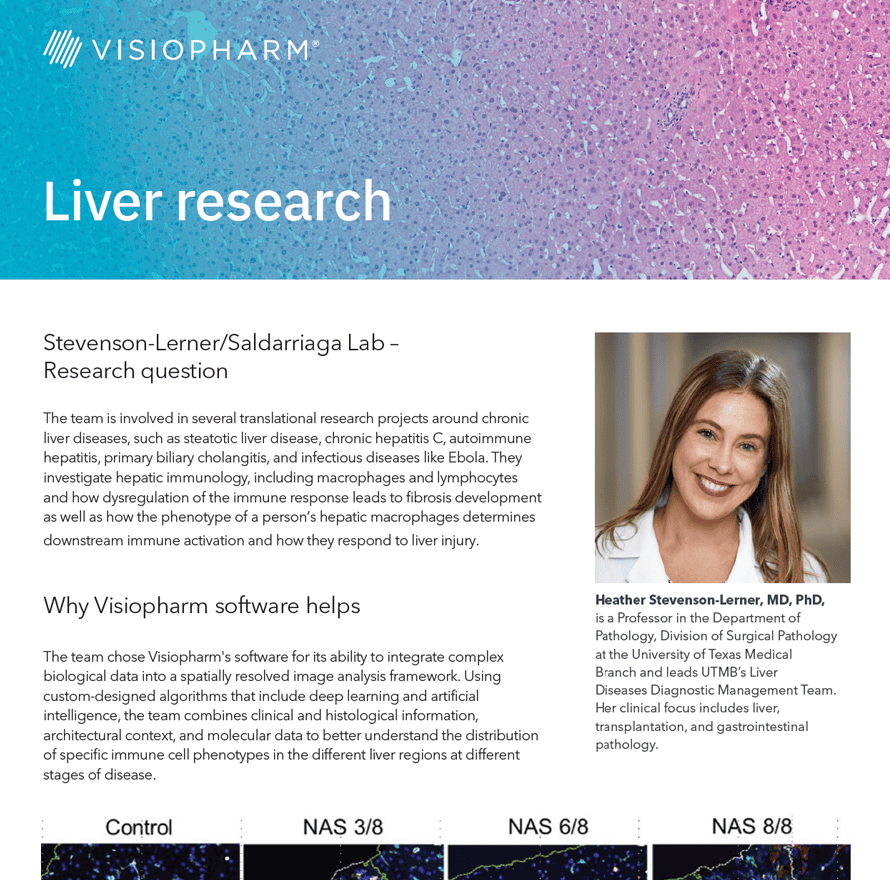
The Stevenson-Lerner/Saldarriaga Lab team is involved in several translational research projects around chronic liver diseases, such as steatotic liver disease, chronic hepatitis C, autoimmune hepatitis, primary biliary cholangitis, and infectious diseases like Ebola. They investigate hepatic immunology, including macrophages and lymphocytes and how dysregulation of the immune response leads to fibrosis development as well as how the phenotype of a person’s hepatic macrophages determines downstream immune activation and how they respond to liver injury.
Why Visiopharm’s Discovery software helps
The team chose Visiopharm’s software for its ability to integrate complex biological data into a spatially resolved image analysis framework.
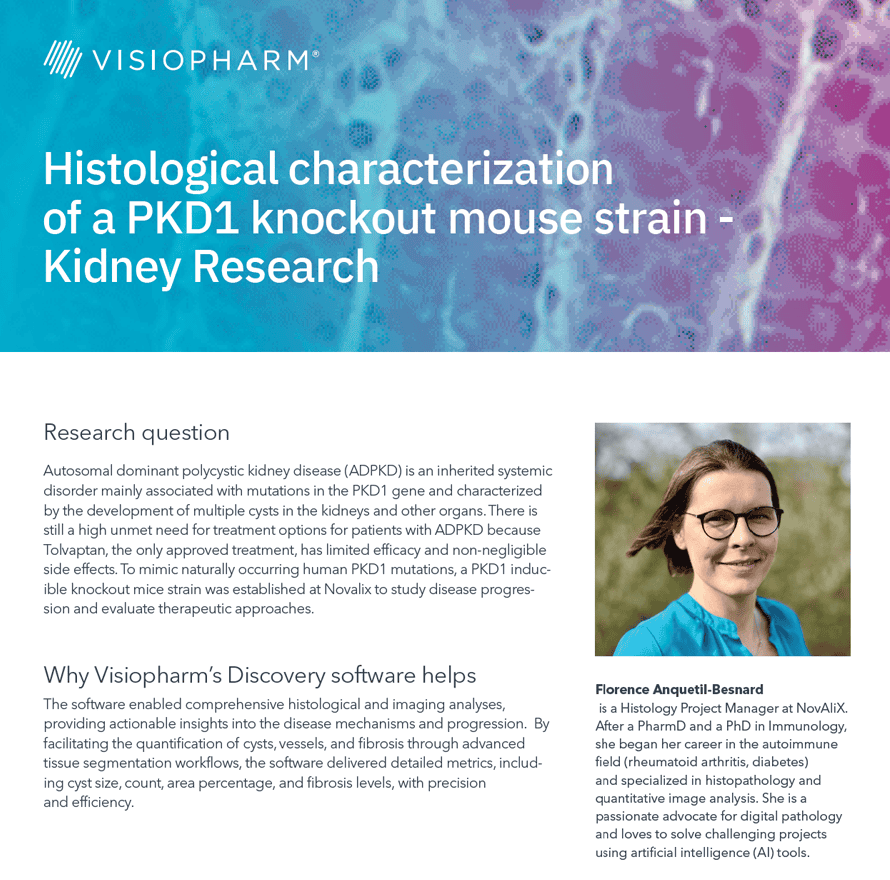
Autosomal dominant polycystic kidney disease (ADPKD) is an inherited systemic disorder mainly associated with mutations in the PKD1 gene and characterized by the development of multiple cysts in the kidneys and other organs. There is still a high unmet need for treatment options for patients with ADPKD because Tolvaptan, the only approved treatment, has limited efficacy and non-negligible side effects. To mimic naturally occurring human PKD1 mutations, a PKD1 inducible knockout mice strain was established at Novalix to study disease progression and evaluate therapeutic approaches.
Why Visiopharm’s Discovery software helps
The software enabled comprehensive histological and imaging analyses, providing actionable insights into the disease mechanisms and progression.
The research focuses on improving bladder cancer grading by addressing variability in how pathologists categorize tumors into low-grade or highgrade. The challenge lies in the subjectivity of grading, which can lead to differing treatment decisions, impacting patient outcomes. This study aims to create an objective, reproducible grading system through AI-driven image analysis.
How Visiopharm’s Discovery software helps
Visiopharm’s Discovery software enables the automated analysis of millions of nuclei, overcoming the limitations of manual grading.