Transcript
Thank you for having us today.
We appreciate the opportunity to highlight how you as users can apply the Hyperion Imaging System. In conjunction with Visiopharm’s advanced image analysis platform to provide a robust and accurate assessment of highly multiplex datasets.
There are common challenges users face when analyzing multiplex images and determining the phenotypes.
Among them is an understanding of how deep learning AI works and when it’s best applied.
Deep learning, when approached correctly, can be used to accurately identify the most difficult of features, but flexible enough to handle normal variation across samples.
This is the common approach Visiopharm uses for segmentations of tissue compartments and other regions as well as cell segmentation.
Cell segmentation is certainly a critical component, and accurate accuracy in this step will influence any phenotypic assessment.
Then we’ll discuss Visiopharm’s approach to multiplex phenotyping.
In an ideal situation, phenotyping can be either manual or automated, is highly accurate, but can also be used dynamically to define the range of expressions from broad assessments to rare phenotype identification or evaluation of targeted groups of phenotypes.
Finally, I’ll show the value of integration within an image analysis platform, which can be used to maximize the information you get from your available slides.
The reality of deep learning and artificial intelligence is that it’s not really magic.
Automation doesn’t necessarily result in augmentation of your dataset. What’s commonly thought is that you can provide a raw image, put it in a magic hat called artificial intelligence, and out pops data that is robust, validated, standardized, and that you can trust.
The truth of the matter is deep learning is actually more like this workflow, and Visiopharm aims to simplify this process in augmenting the analysis.
We start with annotations provided by either machine learning techniques or by expert pathologists, technicians, or PIs, such as yourself.
We then plug those annotations into a convolutional neural network so that it can learn from that root example.
Then we go through an iterative process of continually providing additional annotations or corrections to the convolutional neural network through refinement and optimization so that when a mature algorithm is obtained, the endpoint results are exactly what they should be, standardized, precise, accurate, and trusted.
This is the classic multiplex phenotyping workflow that we use at Visiopharm.
We start with our comprehensive AI toolbox.
Starting with tissue detection, we commonly apply a machine learning approach in order to identify the target tissue. Then within that target tissue, we perform a number of regional segmentations.
This allows us to target our analysis very specifically to the regions we’re most interested in interrogating.
Then we accurately define the cellular compartment so that we have a strong basis for performing the multiplex phenotyping.
Then we step into the highplex immunofluorescent analysis.
We first refine the multiplex phenotyping by looking at each individual root channel and optimizing on those channels so that when we train and run the targeted multiplex algorithm, this algorithm can use those true positives in order to automate automatically identify every possible phenotype of two plex or greater in the dataset based on what it was trained on.
Of course, no multiplex phenotyping assessment would be complete without a robust amount of data behind it. And we provide a a variety of metric based and phenographic, assessments in order to make your data interpretation as complete as it can be.
Multiplex phenotyping starts with a strong foundation.
Here, we start with tissue detection, then proceed to regional segmentation and cell segmentation.
Tissue detection is a technique that we employ quite commonly to target the tissue area very specifically, and it also increases the efficiency of subsequent analysis by optimizing the use of computational power and analytical time only to that tissue area of interest.
We then jump into regional segmentation using our deep learning toolkit.
This has the ability to very accurately identify those tissue compartments that you’re interested in.
We commonly employ this to identify unique tissue areas, such as regions of the brain or tumor, stroma, and necrosis.
But we also apply it to general, features like different tissue layers, including the mucosa, submucosa, muscularis, submuscularis, and fill villi of the GI tract.
It can also be used as a robust tool to identify artifacts in your sections, such as fold or tear margins, staining and acquisition artifacts, and even vasculature, which you may want to include or exclude from your analysis.
Across each one of these different regions, you can perform any subsequent analysis cumulatively, or you can isolate that region for an independent analysis.
We then move into cell segmentation.
And in the Hyperion system, we have the additional advantage of having multiple nuclear signals to inform the nuclear compartment identification.
In the Visiopharm platform, we’re able to use each one of these to very accurately identify the nuclear component across the myriad of different traits.
Nuclear segmentation occurs robustly independent of density, size, shape, intensity, expression, and many of the other common variation that’s seen in nuclear, expressions.
We then use a deep learning app to not only identify these nuclei in comparison to the background, but we include a marginal boundary between the nuclei and the background so that we can use this tool to accurately segment the nuclei very robustly.
And this can occur for closely overlapping or touching nuclei and segment them accordingly.
We then take that nuclear assessment and perform a cell expansion.
Using our segmentation tools provided in the platform, we’re able to segment out the background around each one of these nuclei and expand the cellular area dynamically. And we provide multiple levels of control so that you can provide can segment these cells very accurately.
This can be further augmented when you include cytoplasmic and membrane markers coming from the panel itself so that your cell assessment can be very accurate to the true volume.
Now we’re going to move into advanced phenotyping, and we’ll focus on that downstream workflow where first we optimize on the root channels, and then we allow the algorithm to perform a targeted multiplex analysis.
Again, this occurs automatically in the algorithm.
Then we’ll step into the data interpretation tools as well.
In terms of channel optimization, by optimizing on each individual root channel, you have a very strong control over the individual identification of true positive cells in comparison to the negative cells.
We can also do things like control the amount of bleed over and other factors that you would not want to be used to identify positive cells.
At the heart of this algorithm, put quite simply, is a three peak Gaussian distribution for each channel, and that’s what’s used to identify the true positive expression on any given channel.
We then automatically perform the phenotype assessments using that algorithm on every duplex or greater phenotype.
The identification of these individual phenotypic expressions is highly accurate and can be further segmented.
Of course, the classification of these phenotypes should be dynamic, and we allow the capability to edit these phenotypes robustly.
In the case that you want to downgrade, a five plex to a three plex that targets only the biologically relevant phenotype, that can be done with the click of about two buttons.
We also strive to make this process as easy as possible so that you can use one app for multiple analyses.
Commonly, we’re asked to perform a targeted phenotypic assessment among two, three, maybe four different phenotypes.
In this scenario, we can easily select the two, three, or four channels that you’re most interested in observe making observations on. We’ll turn the remaining channels off, and because the app is already optimized, we can perform a very targeted analysis on just those phenotypes and their relationships.
Additionally, in this IMC dataset that I’m showing you here, we were able to do a comprehensive analysis across the entire tissue compartment, and we observed two hundred and eleven distinct phenotypes.
We were then able to use the exact same algorithm, modify it so that we were only targeting a certain region of the tissue, and perform that analysis using the same root algorithm.
You can also use this comprehensive toolbox to really empower your endpoint analysis because of the level of integration that’s included.
You can take an HNE or a bright field image of any type, coregister it with an immunofluorescent image or even two immunofluorescent images, perhaps even multiplexed.
We would use the first multiplexing, image to then perform a multiplex analysis.
From there, we would identify a few major phenotypes that we would want to interrogate further.
After those are identified, we would select those areas and expand them in order to perform a regional assessment using regions of interest.
In a subsequent image or a co-registered image, we can then transfer this learning of regions into that second image, perform a cell segmentation, and do a multiplex analysis exclusively within those regions.
In essence, what you would have here is an approach where you can use the phenotype assessments from one image on a serial section or serial stained image to have an informed analysis on aligned images.
Of course, no multiplex phenotyping algorithm would be complete without the ability to acquire data, robust data as an endpoint.
Within the Visiopharm platform, we certainly have the availability to deliver simple metrics, such as counts, areas, diameters, and many other common features that you would be interested in.
In addition to that, we can interrogate the root image itself to look at signal intensities, entropy, locational data for each one of these cells.
On top of that, distance measurements are quite simple.
We also have the ability to create density maps of individual phenotypes or any group of phenotypes so that you can easily and effectively identify areas where a certain phenotype is of highest or lowest expression.
We also provide a myriad of phenographs to aid in the data interpretation, such as tSNEs, phenotype profiles, phenotype matrices, and neighborhood plots.
In the particular IMC dataset that I’ve been displaying throughout this presentation, we were able to provide a fully metric based analysis as an endpoint so that the PI could be equipped with all the information he needed from these data.
We provided information about biomarker counts and areas, as well as distance measurements.
Distance measurements can be related in terms of self to self or one from one phenotype to another.
In addition to this, we can provide on any one or any group of phenotypes density metrics so that you can evaluate the expression of a given phenotype.
And then from there, those data can be regionalized so that you can interrogate those phenotype dense areas in further detail.
Regarding the multiplex phenographs, we have an entire database of phenographs that are available to you as a Visioform user.
We have TSNEs.
Soon to be included are UMAP plots that’ll allow you to look at the spatial relationship in a relative convention.
We can also report out on phenotype profiles, phenotype matrices, and neighborhood plots, whether that be on a single image, a cohort of images, or across an entire study.
We’re also able to build in comparative evaluations within the platform so that you can compare control to a treatment study.
With each one of these phenographs, the metadata is always available so that you can correlate locational data or expression data dynamically in the information system of your choice.
To evaluate the tSNE plots in a little more detail, we have the capability of making these tSNE plots for each individual channel as well as for the entire image, cohort, or study.
Of course, locational data is available for all of these. And while we do not yet have the integration to trace these back and forth dynamically to their relative cell of interest, that’s a feature that’s coming in the next release of the software. So I encourage you to stay in touch and find out about these new features.
I wanna thank you for joining us today. Of course, our time has been brief. So if you do have any questions that can’t be addressed in our in in the time following, please feel free to reach out to us. Our contact information is listed there, and we’re happy to visit with you today.
Join Fluidigm and Visiopharm at the Imaging Mass Cytometry Summit for a demonstrtaion of the uitility of Visiopharm’s Phenotyping and Deep Learning toolbox for advanced multiplex phenotype analysis of Hyperion Imaging System multiplexed data sets.
We will provide an overview of Visiopharm’s flexible and intuitive Deep Learning and Advanced Phenotyping solutions to provide a comprehensive analysis of highly multiplexed IMC datasets. Specifically, we will demonstrate Visiopharm’s approach to and scope of cell segmentation and phenotyping algortithm development using real world IMC examples.
-
- Tissue mining to enhance anlysis
-
- Cell segmentation by deep learning
-
- Robust multiplex phenotyping
-
- Integration supported phenotyping

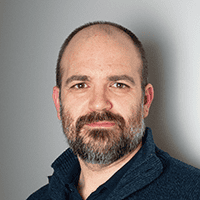
Brit Boehmer, Account Executive, Sales US, Visiopharm
Brit Boehmer is an Account Executive for the US West based in Denver, CO. He has a master’s and Ph.D. in physiology from Oklahoma State University and completed postdoctoral research in reproduction, nutrition and fetal growth. Brit joined Visiopharm in 2020 and supports clients with pre-sale APP development and advice on image analysis and histopathology workflows.