Preterm rabbit model of bronchopulmonary dysplasia
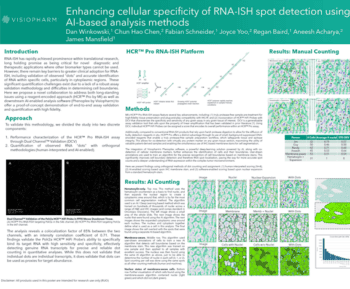
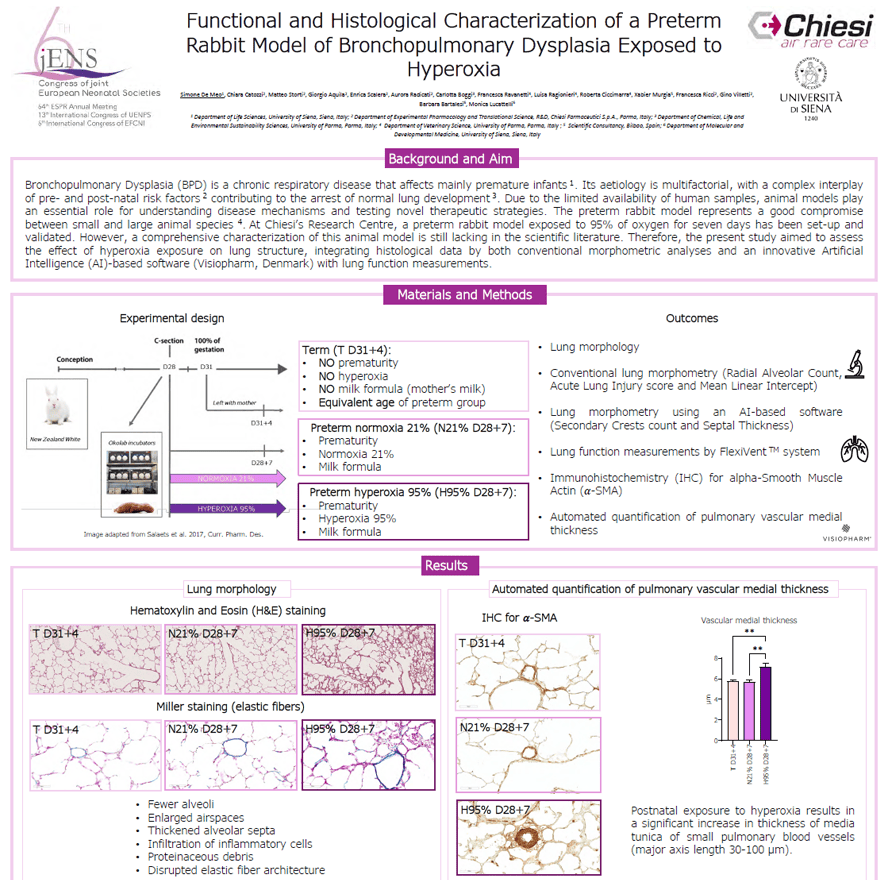
Bronchopulmonary dysplasia (BPD), a severe chronic lung disease that affects premature infants, has a multifactorial aetiology. To better understand disease mechanisms and to test novel therapeutic strategies, Chiesi Farmaceutici has set up and validated a preterm rabbit model. Therefore, the present study aimed to assess the effect of hyperoxia exposure on lung structure by integrating histological data from both conventional morphometric analyses and an innovative Artificial Intelligence (AI)-based software (Visiopharm, Denmark) with lung function measurements. The model was characterized by exposing newborn rabbits to high oxygen levels (95% hyperoxia) for seven days and comparing them with control groups to determine how well it reproduces the structural and functional lung abnormalities observed in human BPD.
The analysis revealed clear signs of impaired lung development in hyperoxia-exposed animals. Histological evaluation showed fewer alveoli, enlarged airspaces, thickened alveolar septa, inflammatory cell infiltration, and disruption of elastic fibre architecture. Advanced morphometric assessment, including AI-based image analysis, confirmed arrested alveolarization and significant structural abnormalities consistent with those observed in infants with BPD. Lung function testing also demonstrated reduced inspiratory capacity and static compliance, together with increased tissue damping and elastance, indicating substantial respiratory impairment.
In addition, hyperoxia exposure resulted in pulmonary vascular remodelling, with increased thickness of the vascular media in small pulmonary blood vessels. These findings closely mirror key pathological features of human BPD. Overall, the results demonstrate that the preterm hyperoxia-exposed rabbit closely mimics both the structural and functional consequences of bronchopulmonary dysplasia, supporting its value as a translational model for investigating disease mechanisms, evaluating biomarkers, and testing innovative therapies for neonatal lung disease.
Simone De Meo1, Chiara Catozzi2, Matteo Storti2, Giorgio Aquila2, Enrica Scalera2, Aurora Radicati2, Carlotta Boggi3, Francesca Ravanetti4, Luisa Ragionieri4, Roberta Ciccimarra4, Xabier Murgia5, Francesca Ricci2, Gino Villetti2, Barbara Bartalesi6, Monica Lucattelli6
- Department of Life Sciences, University of Siena, Siena, Italy
- Department of Experimental Pharmacology and Translational Science, R&D, Chiesi Farmaceutici S.p.A., Parma, Italy
- Department of Chemical, Life and Environmental Sustainability Sciences, University of Parma, Parma, Italy
- Department of Veterinary Science, University of Parma, Parma, Italy
- Scientific Consultancy, Bilbao, Spain
- Department of Molecular and Developmental Medicine, University of Siena, Siena, Italy