Transcript
Welcome, and thank you for taking the time to join us. I’m Jesse Eichorn, director of product marketing here at Proscia, and excited to be the moderator of today’s discussion, overcoming five obstacles to scaling digital pathology and life sciences research.
A few notes before we begin. First, if you do have any questions, please feel free to send them over via the q and a panel. And, yes, today’s discussion will be recorded and made available afterward. So let’s jump right in.
Very excited to introduce today’s panelists, Regan Baird and Ash Wilson. Both have extensive experience in both the operational and vendor side of the pathology spectrum and are able to offer a unique perspective about the topics at hand. Regan Baird’s imaging and image analysis journey began during his PhD at Temple University in Philadelphia and postdoctoral fellowship at Harvard University, Beth Israel Deaconess Medical Center in Boston.
He spent the last twenty years developing and integrating imaging systems and consulting on image analysis techniques.
Regan is currently Visiopharm’s regional director of North America East and spending most of his time helping researchers mind tissue slides and highly multiplexed images for ever more complex data.
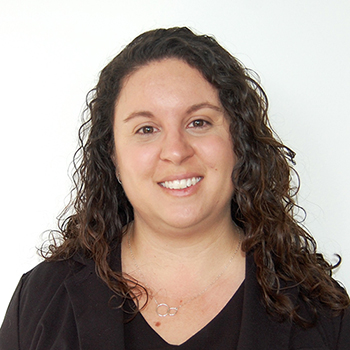
And Ash Wilson is the product manager of for life sciences at Proscia and has been in life sciences for over fifteen years.
She also has nearly decades worth of field experience, including labs and digital pathology serial staining practices.
And a bit about our two companies before we proceed.
Proscia is the creator of Concentric for Research, a digital pathology platform used by some of the leading life sciences organizations and academic institutions to transform image based research at scale.
And Visiopharm creates image analysis software for research built with a foundation based in artificial intelligence and designed to be used by scientists.
You’ll see throughout today’s discussion a bit about how these two systems have integrated to address many of the challenges we’ll touch on today.
So So once again, the topic of today’s discussion is overcoming five obstacles to scaling digital pathology and life sciences research. Digital pathology adoption has accelerated over the past decade, yet the underlying technologies many life sciences organizations use to support their research workflows are not designed to optimize efficiency, collaboration, and growth. The question we’d like to pose to you today, is your organization leveraging data to its fullest potential? We’ll spend the next few minutes discussing these five challenges that those of us at both Proscia and Visiopharm have observed as we’ve worked with life sciences organizations around the globe.
We’ll also share a bit about how our two companies have gone about tackling these challenges. So without further ado, challenge number one, data, data everywhere.
Let’s start with this common challenge. Simply put, the proliferation of data. Often called data silos, many organizations struggle with imaging data that is spread out across the organization, different locations, on hard drives, in the cloud, on individual computers, and not readily accessible to those researchers who may need it to support their research efforts. Regan, what’s your perspective on this challenge?
Yeah. Data, data everywhere is such a great title because it reminds me back when I was a postdoc in the lab, and every single one of us, we were generating massive amounts of data back then. A couple gigabytes was a massive amount of data, and we all carry around our own little shoebox sized hard drive.
No one knew it was on each other’s hard drive. And if one of those hard drives went down, you lost possibly years worth of work. And when you left, no one knew what was on those hard drives, how to access that data, or to be able to use it. I think that there’s really two types of data when we’re talking about digital pathology. We are talking about the digital data for purposes of this conversation, but there’s probably massive amounts of glass slides that have yet to be digitized that share exactly the same problems that we’re gonna be talking about. Only a lot of that data is not accessible to everybody because it’s still in that analog glass format.
So there’s data in data silos across organizations.
There’s data stuck in different hard drives, in different clouds, all over the place. And it’s a question of how do we consolidate all of that information and bring it together so that we’re not replicating experiments and we’re not doing the same things over and over again.
Mhmm.
Yeah. And to add to your story, Reagan, I’ve been in many labs where we’re trying to compare results, and we’re literally walking between rooms and sometimes floors because the results from today are still on the scanning computer, and the results from last week were already on the analysis station. And then if you’re trying to look at information that’s gathered a few months ago, it might have been moved to the server. And then you’re trying to remember the name of the project and kind of, like, where where did you even put that folder?
So with information, like, you know, from one lab being spread out that much, it across an organization, it, you know, it just expounds, and it creates a lot of headaches of lost time, like you said. You know? I mean, really, the focus should be on the analysis and then the interpretation of the results itself.
And the worst part is if you’ve already done those experiments and you can’t find that data or that data has existed and you’ve gotta now recreate it, that’s a that’s that costs a lot of money in some cases. Reagents and tissue can be quite precious, and you don’t wanna have you don’t want data to get lost. You want and you wanna be able to mine stuff that someone who may no longer be in the organization has done.
Absolutely.
Well, that’s great. Let’s, let’s segue now to, to a little video we’ve prepared, Ash. I’ll let you, I’ll let you walk through it.
Oh, absolutely.
So in this example we have here, all the analysis results are placed in index metadata fields and Concentric through the bio and bidirectional integration between Visiopharm and Concentric for Research.
And not only that, but you’re able to search for, all of your results from Visiopharm, through the entire organization. So you don’t have to remember when the study was run or the exact name of the project. It’s all automatically indexed so you can bring that focus back to the interpret interpretation of the data rather than where it is.
Excellent. That’s great. Yeah. Thank you both, for walking through that challenge, and, thank you, Ash, for walking through this example of how, you approach in Visiopharm tackle this challenge, in our integrated system. So let’s, with that, let’s move on to challenge number two, vendor dependence.
We encounter many organizations that are restricted by limitations their vendors place on their ability to adopt different technologies.
So let’s start with you this time, Ash. You know, what’s your experience with this, particular challenge and and the limitations of, of this challenge?
So when I think about data analysis and and research, the focus should always be on getting the best results, and that’s often what a lot of labs focus on. So across an organization, there’s gonna be different equipment to answer different scientific questions and oftentimes even within the same lab. So when I think about this, I wanna know, like, you know, since there’s no limitations on the equipment and how everyone’s gathering the data, there really shouldn’t be limitations when it comes to assessing and combining results from the equipment either.
Yeah. You know, every time you buy an instrument, you’ve got a new piece of software every and, potentially, you’ve made a commitment to a certain software that you’ve locked yourself into. And as things progress and as things get more mature with modernization, how do you get out of some of those vendor dependencies that you’re that you’re currently stuck in?
And and how do how do how can you get all of this data to communicate in a way that you can actually get information short video.
Ash, I’ll leave it to you to walk through it, this time as well.
Yeah. So, with both Visiopharmand Proscia, they’re scanner agnostic, providing industry leading interoperability. So it removes the dependency of specific vendors and, as Reagan, as you said, specific vendor software.
So you just load the slide images from your scanner of choice into Concentric Research.
And then kind of what we have on the screen now is you actually can just immediately send the data directly to open in Vis.
Yeah.
This is great because from Concentric, you can just bring all of your imaging data into our image analysis platform, and you have the bidirectional interaction with the two programs so that data from any instrument can be pooled and analyzed as if it was all curated in the same data set.
That’s great. That’s, excellent insight. And, yeah, I’m sure a challenge that many of the listeners, tuning in, have experienced firsthand and, you know, nice example of, you know, how our two companies have gone about, you know, tackling it. And, generally, let’s let’s yeah. Sure. Go ahead, Regan.
Sorry. We can go back for a second. This is actually really critical when you’re looking at building artificial intelligence algorithms to be very robust because you want them to understand the differences from different scanner manufacturers, different staining conditions.
So you wanna have as much versatile data and, heterogeneity of data across instruments and across staining so that that artificial intelligence can be smart enough to recognize the structures no matter what scanner or what staining conditions it was under.
But I really like that point because then you also wanna make sure that with the vendors, they all have their own names and classifications for for the metadata that’s embedded within the image, and you wanna make sure that that’s standard, across your analysis results and how you’re naming everything even though they’re all coming from different naming conventions.
That’s great. Excellent. Yeah. Great points, both of you. And a nice, segue, I believe, to challenge number three here, Lack of data standardization.
We’ve talked about data proliferation, and we’ve talked about vendor dependence. So now let’s turn to, standardization of data across the organization and the issues that, you know, that lack of standardization causes. So as we’ve explored so far in our discussion, your data often comes from different sources, and the data tends to vary quite a bit. So, Regan, why don’t you pick us up here? Can you talk a bit about how, you’ve seen this challenge emerge at some of the organizations you’ve worked with and, you know, how you’ve seen those organizations, tackle it?
Sure. I mean, this is this is really what the other two challenges have led up to is the Slack and data standard.
There is no image file format standard. So there every vendor has their own image image formats for their own specific regions reasons.
Standing conditions can be lacking state can have lacking standards. How experiments are performed across the organization can change. You’ve got a legacy of experiments that have been done and and data that’s been collected over time, and and organizations make changes in how they wanna standardize that data. Or if they didn’t have a standardization when they started and now they do, what happens to all of that old data?
How do you import impart with every image all of the metadata that you want associated with? With. It’s a really big challenge to have to tag every single image with the new information as you think of new ideas or as your data drives you into a new direction.
And so it really can be a challenge to, to have old data to bring it into a new standard. And and sometimes that standard was created for you because you bought a particular program, and that program had its data standards that you had to abide by that might not be suitable for what you’re trying to get to today.
Whenever I think of data standardization, I always start with just that amount of information that comes with each individual slide. Because not only does it have the metadata, but you have the experimental parameters. And then when you add analysis to that multiplied by all of your images and multiple studies, it’s just an abundant amount of information at every lab’s fingertips just kind of ready for quantification.
But, you know, if it’s not standardized in any way, like, how are you gonna kind of start getting into those insights?
So as more and more of this data is becoming digital, you know, if it could be indexed and cataloged with the same standardization, not just for the experiment, but for all of your experiments across an organization, that information could be mined, you know, forever extensively.
And it’s you’re saying in the the first point, Reagan, you know, if someone left lab and it’s just on a hard drive, if you’re able to standardize that information and have it accessible, you don’t really have to worry then about people leaving the lab.
So all that information can be further mined and functionalized, for just greater insights.
Yeah. And the power of being able to go back in full images and full slides from new experiments because they were already analyzed doesn’t mean that they can’t be reanalyzed.
And in order to be able to search and then research from those the the same data allows you to get higher order experiments and analysis out of them. And so it really if if you’re in a position where you have yet to create that data standard, that’s fantastic because you get to set what kind of metrics you want today. If you already live in an in a data in an in a infrastructure where the data has has been structured but not to your liking, you have the opportunity to, restructure all of that data into something that makes sense for your organization.
And if you haven’t started that process yet, great. You get to make those decisions now. But I don’t think you’re locked into those decisions with something like a program.
You have the flexibility to add to the to the structure in the future.
That’s absolutely true. We try to make everything so it’s configurable for every individual’s leads so you can have something across the entire organization or across your lab. And as you said, alter it, you know, as, like, new information, comes a foot.
And when we were discussing this, in our rehearsal, I remember we were talking about just the way you name things. Everyone has slightly different nomenclatures for how they talk about, different biomarkers.
It’s something capitalized versus not capitalized. And all of those small things can really, really mess you up when you’re trying to search in a Windows folder structure or in some of these other, programs or or or hard drives. And, really, what you would like to have is something that formats and fits to the standard that you wanna set.
Yeah. Absolutely. And I think that when we were talking, I was even thinking of when we’re looking at data ourselves that one of the things we were finding is sometimes people would put, like, March verse or some people put MAR. And so if you can just standardize that automatically, yeah, it just saves you a a lot of headaches.
Yeah. When when we were when I was in the lab, it was like we would color different structures based on the biomarker that we associated with it. And so when my PI in the lab would come in and see something, we’d say, oh, you know, that’s, a thrombus. He’d say, well, it’s not blue.
So how could it be a thrombus? And we were like, but it’s trust me. It is. But it’s not blue and because the standard was that we were always gonna color that blue regardless of what method we were using to identify it.
This is, this is great discussion and some great anecdotes there that I’m sure, some of the viewers here can can relate to or have experienced themselves.
Let me let me go ahead and move on to this video, Ash. Why don’t you take us through, what’s going on here?
Absolutely. So, what we aim to do with Concentric for Research is make the standardization easy at the start.
So what I’m showing you here is a template screen, and the metadata fields are actually taken from a uniform field library. So everyone across the organization has uniform fields.
And so that way, then when you’re looking at the images, they’re all all those fields are available for you to kind of make sure that you’re entering the same information with every experiment.
And then with Visida’s app results, being standardized as well, when the information’s imported, it’s automatically indexed when placed within our system. So everything from the sample project to analysis information automatically has consistency built in.
So as you kind of were were hinting at Reagan, if you’re currently dissatisfied with your lack of consistency at your current tools, Concentra for Research and Visiopharm are easy conversions to help with this.
Yeah. And then you’ve got all of this data that you can search. Right?
That that’s Yep.
The ultimate dream of being able to pull this data down at your fingertips.
Yeah. I really like that. Oh.
I’m sorry. Go ahead, Ash.
Oh, no. What I was gonna say is I really like that you can search by specific parameters of Visiopharm’s results, and so you actually can see across all of the experiments if there were similar results that and then you could actually create, like, a metadata study.
So I absolutely agree. I I think the search of searchability is fantastic.
It’s great. Thank you. Thank you, Ash. Thank you, Regan. Yeah. This is, you know, fundamental fundamental challenge and and absolutely imperative to, you know, all the great things that you wanna do with the data, you know, once it’s been, you know, collected and organized, within your organization.
So, might be a nice segue there to challenge number four, limits to collaboration.
So, facilitating collaboration both within and outside of the organization is imperative, to work the life sciences organizations do, as you all know, those of you, listening into the discussion today. So, let me pass to you, Ash, to start us off here. You know, what are the experiences, that you’ve had with this challenge and how, they’ve been overcome?
Yeah. And, like, you know, each of these challenges are building up. Right? So now you have all of this information, but now you wanna share it with people. So you’ve collected all this data, and you now wanna share it with your colleagues, you know, either in the same lab or across your institute. And sometimes you actually just wanna send parts of it out for consultation or just, you know, another colleague that you’re working at with another institute.
So some of the challenges, right, is collating all this information together to share. And when you’re physically together, you still have to find time where everyone can look at the data and you’re usually kind of crunched over the same desk. Or now, you know, even if it’s over Zoom, it’s still kind of finding all the time that you can walk through all of it together.
And I really feel like that, unfortunately, then starts to slow things down of both getting all that data together and how are can you easily share it, you know, if you’re not physically in the same location.
Mhmm. I think I think there’s one thing that COVID has taught us is that we have to figure out how to collaborate, and we’re talking about really, really large data files. Shipping glass slides around is not practical, and moving big large data files around is is not necessarily practical either. You wanna supposed to see that data can’t see that data in this collaboration.
But, you know, we live in a Zoom world now, and everybody wants to do these collaborations in Zoom. And just like we’re having this conversation, wouldn’t it be great to be able to talk about data in a so similar to what they do with telepathology these days, directly? And so being able to have all of your data curated and collaborated allows you to leverage the best people to doing the right task. So if you’re trying to create an artificial intelligence algorithm to do to do, to find some kind of structures and tissue, wouldn’t it be great to have your pathologists or your experts do that specific aspect of the path and then and then provide to provide that to your data scientists to go on and to continue creating that algorithm or to be able to have, your pathologist validate the results of an algorithm very quickly without being a cumbersome task for them.
And just to add to what you were saying, the then there’s that instantness. Right?
Because you’re sending data to somebody, and if you can immediately see what they’re saying about it or you’ve updated your algorithm and now you have new results, just for everything to also be instantaneous, not just sharing it, but seeing the replies back instantly or someone seeing your changes to the information, I feel like it’s another key part of that that you brought up.
Yeah.
Absolutely. Yeah.
This is great, great. And I you know, this discussion’s, you know, quickly evolving from from challenges to, you know, unearthing some of the opportunities, that present themselves as some of these challenges are met. And to that to that point, we have another video here, Ash. I’ll leave it to you to to walk through it.
Oh, absolutely. So with consent to the research, you can share data with users or even across teams.
And as Regan was saying, you wanna have that security. So we allow people to have view, edit, or full access, or if you’re not on the list, no access at all.
But, of course, when we’re sharing, we would like to give somebody access.
So now with results from Visiopharm, they can also be shared with their colleagues who didn’t happen to run that application. They not only can see that it is themselves, but the results and any notes that their colleagues have made. Basically removing any limitations to collaboration.
A lot of AI these days is black box, and you get the image and you get the answer, but you have no idea how the AI generated that. And so being able to collaborate with the annotations themselves from the AI generated annotations or even, human generated annotations.
It’s just so fantastic because you can visually see why the computer made the decisions it made and why it might have made mistakes so that they can be corrected next iteration.
That’s great. And we’ve, we’ve slowly been building here. Without further ado, I’d like to unveil challenge number five, unlocking the power of your data. So we’ve talked a lot about the underlying challenges related to the way data is organized and managed. So let’s turn a bit more attention.
And, you know, Ash and Regan, you both been alluding to this, as we’ve gone through the discussion. But, you know, we’ll turn our attention to the challenges and the opportunities organizations face, when it comes to actually putting that data to good use. And, yeah, the opportunities to become available, you know, once these challenges are are overcome. And we’ve seen a little bit about that with the last couple, you know, the last couple, sections. So, Regan, I’m gonna go ahead and hand it over to you this time to, to take us into this topic. And, I believe we have a video queued up to, to highlight, you saw what what we’d like to share, as well.
Sure. Yeah. I mean, ultimately, once you’ve got your data curated and you’ve spent the time to create data structured, you wanna get the most out of it. This is your most precious asset is is is the the image data, the tissue data, the in some cases, some very expensive reagents have gone into preparing this.
And so you wanna be able to get the most out of this data today and possibly answer questions down the road that you didn’t even have today. And so you want this data to be available for you in many, many ways. You also have expertise in your organization who you want to interact with these images so that they’re doing the things that they do best with them. So that in the end, you get the highest quality out of the data that’s that’s in the system.
And so I think the combination of being able to search all of this structured data and then being able to bring that into a powerful image analysis platform like Visiopharm.
And if you wanna run the next slide, let me go ahead, and show you how how easy it is to apply AI once you have really good data.
If you supply an AI bad data, you’re gonna get bad results. But if you have good data and good curated data, then it can be really easy to generate algorithms to do different tasks. And in this example here, we’re just gonna show how you can paint to train across a couple of examples of the image. That’s a pretty simplified experiment here here just for the demonstration purposes, but how with a couple of annotations, we can go in and highlight different structures.
This could be done by a pathologist or a technician or someone who who has an expertise in doing this.
This could possibly be done in Concentric through the collaborative nature of Concentric, Concentric. And then those annotations can be brought into Visiopharm, or those annotations could be done in Visiopharm directly, depending on your workflows.
And so these annotations can simply be provided.
If you’re doing this in a rigorous way, you might wanna have several pathologists or several different people generating these algorithms across multiple images, across multiple scanner formats as we’ve talked about so that you have a really nice dataset to provide the the AI. And then you simply press a button and let the computer, learn from all of the annotations that you provided it. Once you’ve, once you’ve gone through the training protocols and there’s different types. There’s machine learning options and there’s deep learning options within our program. You can simply, run the AI across a region of interest as we’re doing in this green box here, or you could do it across the whole tissue.
And very quickly, you can see the results of that deep learning algorithm in this case or or the AI.
And then you can present this through the collaborative software of Concentrix to, the to the, pathologist or whoever is going to be doing the validation of this of this particular algorithm. In this particular case, we have an algorithm that’s doing some tissue compartmentalization, which could be then used for downstream analysis. The results of that tissue compartmentalization could be uploaded into Concentric and become part of the metadata for all of those images. And perhaps there’s some, quantity of that that you would like to pull down for your next higher order experiment.
Yeah. I exactly. When I when I think of these challenges, like, kind of altogether and how they’re addressed, we’re kind of able to see that unencumbered access to your data really shifts the focus to the scientific inquiries. So you can start to imagine no longer wasting time looking for, including all your data. As you said before, we get rerunning experiments, which is just a waste of time and money.
And instead, you you’re incorporating that high power image analysis throughput.
You can begin delivering on the answers to questions that you’ve had or it’s kind of we’ve been hinting that even questions you didn’t even know that you had.
So when everything’s searchable, accessible, and integrated, especially with analysis applications, it automatically puts the focus on spending time on generating new insights with your data, basically realizing the full value and potential of your research, or, as you have here, kind of unlocking the power of your data.
That’s excellent. Thank you both, for walking through that. And that concludes the five challenges. So, once again, thank you, Reagan and Ash, for the great discussion.
We’re gonna answer a few questions. But before we get to them, just wanted to spend a moment and, share with you a bit more about our two companies. You’ve seen seen about a bit about what, what we offer and, what our integration together offers.
You know, both Proscia and Visiopharm have created a connected digital ecosystem that eliminates data silos and facilitates the introduction of analysis results into routine research resulting in faster, more informed decisions. So we encourage you to reach out to us directly and learn more about our solutions and how we might be able to help your organization.
And with that, let’s, go ahead and jump into some of the questions that have come through.
We’ve time for just a few here. The first one I’ll throw out to the team.
Do you have any practical advice as to where to start the process thinking about data I already have within my organization? So, thinking back to some of the earlier challenges, it sounds like, this might be coming from someone who, you you know, has a bunch of data. Maybe it’s not organized the way they’d like it, to be. You know, where where should that person think about starting the process?
I mean, with this, right, I always think really kind of jump right in with getting all that data together and collating it because then you can start to see themes, especially if you’re the data wasn’t necessarily initially standardized or was kind of named different things from different institutes. And you put it all together, and that’s when you can start her to standardize it. And then from there, you’ll be able to kind of mine it. So I really think just kind of, you know, jumping in and collecting all that information together first.
It’s never too soon to start. Right?
Yeah.
The hardest part is getting over that that energy, that inertia of of starting. That’s that’s really the hardest part. But there are tools out there to to streamline this and to make it easier and to be able to bidirectionally work and integrate with different programs. Each does the the path the best.
Right? And so you’ve got the best of class solution in image management and and data management from the Proscia Concentric for research side. And being able to pair that with the analytics from Visiopharm really gives you the power to get the most out of that data. And so the sooner you can start, the sooner you’re gonna realize that investment.
Excellent.
Yeah. Great, great answer. Great perspectives.
We have one more here.
This might have come in before you walk through, the Visiopharm capabilities, around challenge five, Regan. But the question is, what are some of the other capabilities, that are available with Visiopharm, in terms of image analysis? So I don’t know if you wanna cover off on anything, that the solution can do, that you didn’t otherwise talk about, just a few moments ago.
Yeah. Sure. I’m happy to. I mean, it is it is the base platform really is an image analysis toolbox where you get to use the images as we’ve shown in that video to train the computer and the algorithms to find basically any kind of structures you want.
It works in in fluorescence. It works in some of these new multiplex applications that are out there. It works, obviously, in your special stains in your IHC. And the idea is to be able to try to automate with robust and precise algorithms, the the precise algorithms, the the so to extract the data that you’re looking to from all of those, different types of ex of of of of slides that you’re bringing into the system.
And the reality is you don’t necessarily know what kind of experiments you’re gonna be running today, tomorrow, and in the future. So you need a really flexible platform that allows you to answer a lot of those questions. On top of image analysis, we also have some workflows that do things like extract TMAs from, extract course from a TMA if you’re doing tissue microarrays.
We have software that can do serial section co-registration.
So if you wanna do some cross modality experiments or some types of, cyclic multiplexing experiments, there’s tools to be able to bring data together.
And then we’ve got a nice new tool that we use for multiplexing so you can automatically phenotype every single cell in a in a in a sample, for example. And so rather than having to train the computer to find the thirty different phenotypes you may have in a sample, you just ask the computer to tell you what phenotypes are present in that sample. So there’s there’s a lot of tools for developing, different types of analytics. And our philosophy is to have an open platform so that you get to control all of the rules that the computer is following, but in a simple way so that you don’t have to know how to do do any computer programming. And for those computer programmers out there that really like those advanced tools, we have a lot of options built in so that you don’t lose any of that functionality that you might think you’re getting from, GUI the GUI interface.
Excellent. Thanks for that, Regan. And, you know, with that great answer, we’re gonna have to leave it there.
So I’d like to thank everyone, who turned into this who tuned into this discussion, both for the live recording and, the on demand version. I’d like to thank Regan and Ash, for the great discussion and the wonderful insight and the the anecdotes they shared along the way. I hope they resonated, with some of you out there. For more information about Proscia or Visiopharm, feel free to visit Proscia.com or Visiopharm.com or, reach out to us directly. So thanks again, and have a great day.
Is your digital pathology implementation holding you back from realizing the full potential of your data?
Join this short, moderated discussion to learn how to overcome 5 common challenges life sciences organizations experience as they scale their digital pathology operations. These challenges range from data standardization to collaboration, and our panel of experts will discuss the implications of each and how to go about addressing them.
As you continue expanding digital pathology to drive research, overcoming these 5 obstacles is critical to creating an enterprise-wide digital ecosystem to drive more informed decision-making.
Presented at as a joint webinar with Proscia on March 4, 2021.
-
- Struggle to collaborate with internal and external experts
-
- Have data distributed across your organization, slowing down your work and siloing your analysis
-
- Are looking to get more value from the data you have
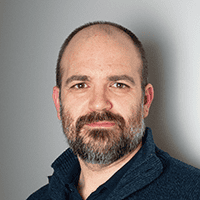
Regan Baird, PhD, Scientific Consulting Sales Manager, Visiopharm
Regan has been with Visiopharm, Inc. since October 2015 and currently manages the eastern half of North America. Beginning with his Ph.D. at Temple University in Philadelphia and Post-Doctoral Fellowship at Beth Israel Deaconess Medical Center in Boston, he has spent over 20 years translating cellular and tissue based digital image analysis to biologists. Regan enjoys empowering pathologists with new digital tools to augment their workflow and enrich tissue-based analyses.

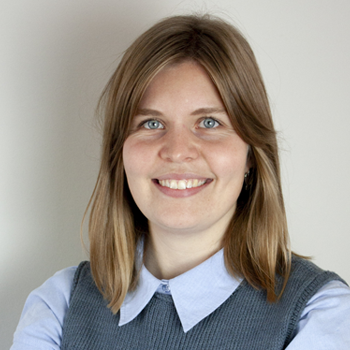
Ash Wilson, Product Manager, Research, Proscia
Ash Wilson is the Product Manager for Life Sciences at Proscia and has been in Life Sciences for over 15 years. She also has nearly a decade’s worth of field experience, including labs in digital pathology serial staining practices.