Flexible analysis for veterinary pathology: Interview with Simone de Brot

Simone de Brot is a veterinary pathologist at the Institute of Animal Pathology of the Department of Infectious Diseases and Pathobiology (DIP) of the University of Bern, Switzerland. The DIP carries out biomedical research to improve health and well-being of animals and humans. It is strongly involved in teaching and education in veterinary medicine, and includes not only students of veterinary medicine, but also those of medicine and natural sciences. The DIP offers research-supported diagnostic services to various stakeholders, including academic and private clinics, veterinary public health institutions and medical laboratories and clinicians.
Please tell us a bit about your research center and what you do.
At the Institute of Animal Pathology, University of Bern, we examine tissues from a wide variety of animal species for diagnostic, teaching, and research purposes. Our institute’s own research primarily focuses on cancer and host–pathogen interactions. Within our core facility COMPATH (Comparative Pathology), a joint University of Bern platform for human and veterinary pathology, we mainly analyze tissues from animal models as well as in vitro models provided by internal and external research groups from academia, industry, and the private sector. Our work typically involves the evaluation of histological sections, often in combination with immunohistochemistry or immunofluorescence, to address specific scientific questions. These analyses are largely performed using digital pathology approaches. Digital workflows allow us to ensure objective, standardized, and reproducible evaluation of tissue sections. This approach also facilitates quantitative image analysis and supports collaborative research projects.
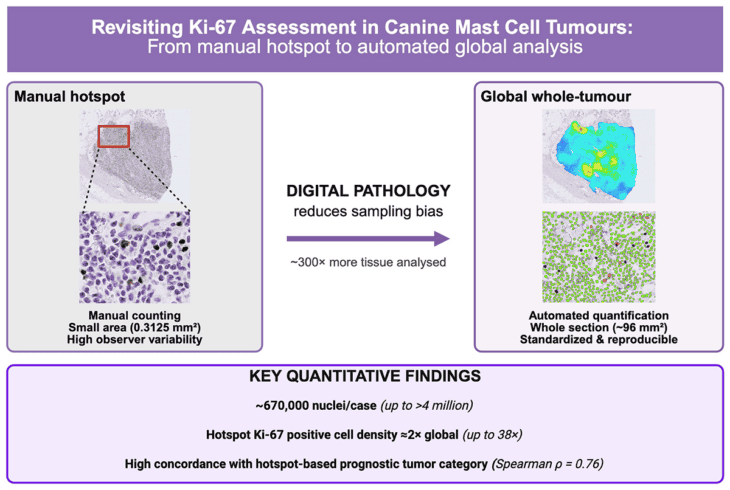
Graphical abstract for: Revisiting Ki-67 Assessment in Canine Mast Cell Tumours: From Manual Hotspot to Automated Global Analysis, DOI: 10.3390/vetsci13020198
Which kind of problems or questions do you address with Visiopharm? How did Visiopharm help you overcome those initial challenges?
The size of our projects is highly variable. We frequently handle small to medium-sized projects, often consisting of only 10 to 100 tissue sections. At the same time, these samples show considerable variability with regard to tissue type, extent and nature of lesions, as well as tissue and staining quality. As a result, predefined digital analysis solutions, often developed for human and mouse tissues using standardized staining protocols, are frequently not applicable in our setting. With only a few exceptions, we therefore develop project-specific analytical applications (APPs) tailored to the individual study. To keep the required effort manageable and enable pathologists themselves to perform these analyses, we rely on user-friendly software. Equally important are integrated options for deep learning classifiers, a wide range of post-processing steps, and flexible output formats. In the vast majority of cases, Visiopharm provides the solution that allows us to address these diverse analytical challenges efficiently.
“In our work with highly heterogeneous samples across many animal species and study designs, flexibility is essential. Visiopharm gives us the freedom to build tailored analyses while remaining intuitive enough for pathologists to use efficiently.“
Simone de Brot
What specific capabilities of the product do you find most helpful?
A particularly useful feature for our work is the ability to combine deep learning and threshold classifiers within a single app. We frequently use this approach in a two-step workflow. In a first step, a deep learning classifier is used to identify the specific cell type or tissue structure that should be evaluated for a selected tissue marker (for example, goblet cells in the small intestine). In a second step, threshold-based classification is applied to categorize these cells based on staining characteristics, such as distinguishing neutral from acidic goblet cells.
Another highly specialized but important function for us is the ability to define an object (e.g., a cell nucleus) as belonging to a category (e.g., positive for an IHC marker) based on selected central pixel values. For instance, we may analyze only the lowest 5% of pixel intensities to detect small punctate signals, such as those observed in in situ hybridization. Conversely, for more diffusely expressed markers, we may evaluate the central 25–75% of pixel intensities, which helps exclude edge artifacts or small nonspecific staining patterns.
Finally, a feature that greatly improves our time management and overall workflow across nearly all applications is batch processing. This allows analyses to be performed in the background without interrupting other ongoing work.
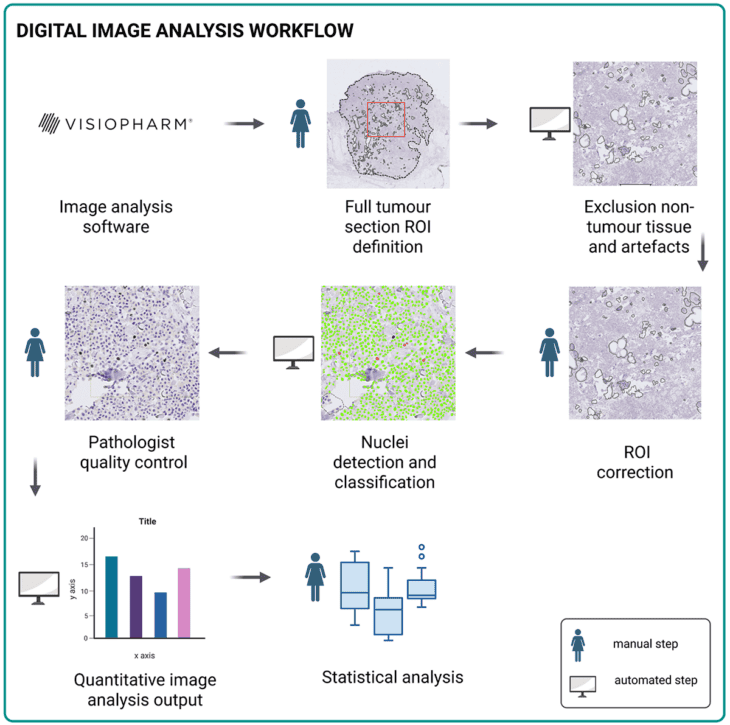
Comprehensive workflow for digital Ki-67 quantification in tumour tissue sections; from: DOI: 10.3390/vetsci13020198
Could you share some insights into how the software has added value to your project if any ? How does it make your work easier?
Digital analyses using Visiopharm software have fundamentally transformed our work as veterinary pathologists in the evaluation of tissue sections from scientific studies, very much for the better. Traditional semi-quantitative assessments, which were often imprecise and somewhat subjective, have largely been replaced by precise, fully quantitative, and clearly reproducible analyses. As a result, we can extract substantially more information from each tissue section, greatly improving the quality of microscopy-based studies.
Researchers have recognized these possibilities, and we are experiencing a strong and growing demand for such analyses at our institute. At the same time, the software provides an excellent tool to directly compare traditional histological evaluations with digital approaches, allowing us to actively contribute to the development and implementation of digital pathology. This is particularly important in veterinary medicine, where digital pathology is still less widely adopted and offers considerable potential for future growth.
Importantly, what has become easier is not necessarily the analyses themselves, these have actually become more sophisticated and complex. Rather, our work is now better supported by robust digital tools. Communication and confidence in the performed histological analyses have improved substantially, making it easier to present, discuss, and justify our findings in scientific collaborations.
Examples of their published work:
Deep Learning-based Whole-Slide Ki-67 Analysis in Canine Mast Cell Tumors: Correlation with Traditional Scoring Systems and KIT Mutation Status.
Dietrich N, Klopfleisch R, Conrad T, Puget C, Rottenberg S, Kiupel M, de Brot S, Under review (Pathology Informatics)
Revisiting Ki-67 Assessment in Canine Mast Cell Tumours: From Manual Hotspot to Automated Global Analysis.
Scalco R, Wasmer E, Jäger K, Rottenberg S, Aupperle-Lellbach H, de Brot S. , Vet Sci. 2026 Feb 18;13(2):198. Link
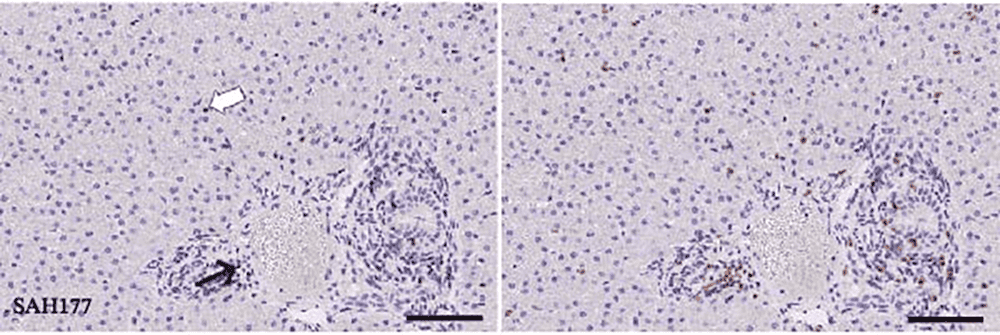
Wesselsbron Virus-Induced Hepatitis in Ewes and Lambs Unraveled Through Machine Learning-Driven Digital Histopathology.
Grau-Roma L, de Brot S, Zimoch M, Clerc L, Donzé N, Liniger M, Brito F, Herrera A, Godel A, Summerfield A, Benarafa C, García-Nicolás O., Transbound Emerg Dis. 2026 Feb 11;2026:7912840. Link
Comparative Digital Estrogen Receptor Alpha (ERα) Expression Analysis in Benign and Malignant Prostate Tissue of Men and Dogs.
Lothion-Roy J, Aeschlimann L, Hiller LA, Rottenberg S, Mongan NP, Rutland CS, Rakha E, Dean A, Rubin MA, de Brot S., Prostate. 2026 Apr;86(5):568-581. Link
Share this article